Content Hierarchy Overview
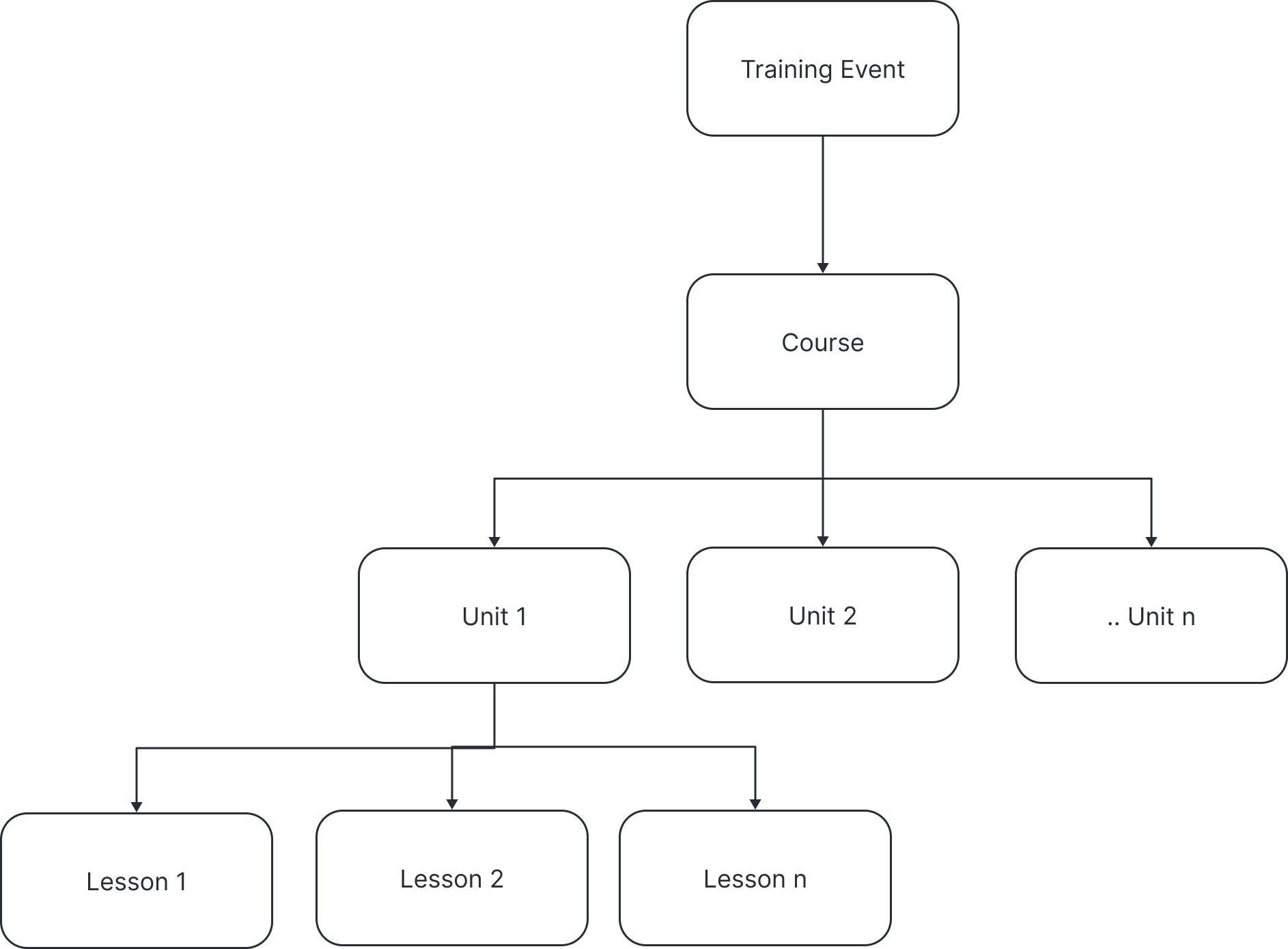
Simulations Labs uses the following structure:
Training Event → Course → Units → Lessons (Content & Challenges/Labs)
Lessons
Lessons are the smallest learning blocks within a unit.
Each lesson includes:
Learning content (theory, explanations, instructions)
Challenges, labs, or simulations for hands-on practice
Lessons are where learners actively engage with the material.
Challenges and Labs
Challenges and labs are embedded within lessons and are used to:
Apply theoretical knowledge
Practice technical skills
Simulate real-world scenarios
They form the practical component of the learning experience.
Units
Units group related lessons together.
Units are used to:
Organize lessons by topic or phase
Break long courses into manageable sections
Create a clear learning flow
Each unit contains one or more lessons.
Courses
A course is made up of multiple units.
Courses:
Define the full learning journey
Combine all units and lessons into a structured program
Can be reused across multiple training events
A course must exist before it can be delivered to participants.
Training Events
A training event is the delivery layer of training.
Training events:
Use a course as their content source
Define access, timing, and enrollment
Control how and when participants experience the course
Training events do not contain content directly.
How It All Comes Together
Create lessons with content and labs
Group lessons into units
Combine units into a course
Deliver the course through a training event
This structure ensures consistent, reusable, and scalable training experiences.
Was this article helpful?
That’s Great!
Thank you for your feedback
Sorry! We couldn't be helpful
Thank you for your feedback
Feedback sent
We appreciate your effort and will try to fix the article